Why Do Strong Glutes Matter as You Age? The Longevity Science

Muscle mass and strength are among the strongest predictors of healthy aging and longevity. In older adults, low muscle strength is linked to more than double the risk of all-cause mortality — an odds ratio of about 2.34 in one large study, independent of muscle mass — while those in the highest quartile of muscle mass have been shown to have roughly 20% lower death risk (a hazard ratio near 0.80). Your glutes, the body's largest muscle group, are central to balance, fall prevention, metabolism, and staying independent as you age. Building and protecting them through resistance training — with non-invasive options like Emsculpt Neo adding focused stimulation — is one of the highest-leverage investments you can make in long-term health.
- Muscle strength independently predicts longevity — low strength is linked to more than double the risk of all-cause mortality (odds ratio ~2.34), while the highest muscle-mass quartile shows about 20% lower death risk (hazard ratio ~0.80).
- Sarcopenia (age-related muscle loss) typically begins around age 30 and accelerates after 60, raising frailty and mortality risk.
- The glutes are the largest muscle group and the key hip extensors/abductors behind balance, gait, and fall recovery.
- Gluteal muscle quality distinguishes fallers from non-fallers; stronger hip abductors are associated with sharply lower fall risk.
- Resistance training is the foundation; non-invasive muscle stimulation like Emsculpt Neo adds focused work on top of it.
Why is muscle a predictor of how long — and how well — you live?
It is easy to think of muscle as cosmetic. The research tells a different story: muscle is one of the most powerful, modifiable predictors of healthy aging.
Large studies of older adults have found that low muscle strength is independently associated with a higher risk of all-cause mortality — even after accounting for muscle mass, activity level, and metabolic health. In one large analysis, older adults with the lowest knee-extensor strength had roughly double the risk of dying from any cause (an odds ratio of about 2.34), a link that held independent of how much muscle mass they carried. Muscle mass tells a parallel story: in a separate NHANES analysis, adults in the highest quartile of muscle-mass index had about a 20% lower risk of death (a hazard ratio near 0.80) than those in the lowest — an association not explained by traditional cardiovascular risk factors. Simple measures of muscle function such as grip strength track closely with disability, hospitalization, and survival.
In other words, how strong you are is a vital sign for how well you will age.
What is sarcopenia, and when does it start?
Sarcopenia is the progressive, age-related loss of muscle mass and strength. It often begins quietly around age 30 and accelerates after 60. Left unchecked, it leads to frailty, slower walking, more falls, loss of independence, and — as the mortality research shows — a higher risk of early death.
The encouraging news: muscle is highly responsive to training at any age. Even adults in their 70s and 80s can meaningfully rebuild strength and muscle with appropriate resistance exercise. Sarcopenia is a strong trend, not a sentence.
Why do the glutes matter so much for aging well?
Your gluteal muscles — the gluteus maximus, medius, and minimus — make up the largest muscle group in the body. They are the engine behind nearly every functional movement that keeps you independent:
- Hip extension — standing up from a chair, climbing stairs, walking uphill.
- Hip abduction & stabilization — keeping your pelvis level and your balance steady on one leg, which is most of walking.
- Posture & back support — strong glutes take load off the lower back.
When the glutes weaken with age, the consequences ripple outward: an unstable gait, lower-back strain, and — critically — a higher risk of falling.

How do strong glutes help prevent falls?
Falls are one of the leading causes of serious injury and loss of independence in older adults — and gluteal strength is directly implicated.
Research using imaging has shown that gluteal muscle composition differentiates fallers from non-fallers: people who fall tend to have weaker, fattier proximal gluteal muscles and lower hip-abduction strength. The gluteus maximus and the hip abductors are precisely the muscles that fire to recover balance after a trip or slip. One longitudinal study reported that greater hip-abductor strength was associated with a dramatically lower likelihood of falling.
Strong glutes, in short, are part of your body's safety system.
What role do glutes play in metabolism and daily function?
Because the glutes are such a large muscle group, they are also metabolically valuable. Skeletal muscle is the body's main site for disposing of blood glucose, so more functional muscle generally supports better metabolic health. Functionally, glute strength is what lets you rise from a low chair, carry groceries up stairs, and stay mobile and self-sufficient — the everyday capacities that define quality of life in later decades.
How can you build and protect your glutes?
The foundation is non-negotiable and well-established:
- Resistance training 2–3 times a week — squats, hip thrusts, bridges, step-ups, and progressive loading.
- Adequate protein to support muscle repair and growth.
- Consistency over time — muscle adapts to repeated, progressive demand.
For some people, though, the glutes are genuinely hard to activate and target — due to desk-bound lifestyles, prior injury, or simply struggling to feel the muscle work. That is where non-invasive muscle stimulation can play a supporting role.
Where does Emsculpt Neo fit in for glutes?
Emsculpt Neo uses HIFEM energy to trigger thousands of supramaximal gluteal contractions in a single 30-minute session — contractions stronger than you can produce voluntarily. In gluteal studies, this technology has been shown to increase muscle thickness by around 25% in the treated area, measured by MRI and CT. Individual results vary.
Emsculpt Neo is a complement to, not a replacement for, an active lifestyle. It will not undo a sedentary routine on its own, and it is not a longevity treatment in itself. But for someone working to build gluteal strength — particularly those who find the glutes hard to engage, or who want to jump-start their progress non-invasively — it can be a useful supportive tool alongside resistance training and good nutrition.
If strong glutes are part of your healthy-aging plan, Emsculpt Neo for the glutes at our Highland Park clinic is one option worth discussing with a provider.


Glutes, trained at an intensity the gym cannot reach.
One thirty-minute session contracts the muscle far more often than a voluntary workout can — which is why the series in this article is short, supervised and specific.
Emsculpt Neo
Builds muscle and reduces fat in the same thirty minutes.
Full Emsculpt Neo page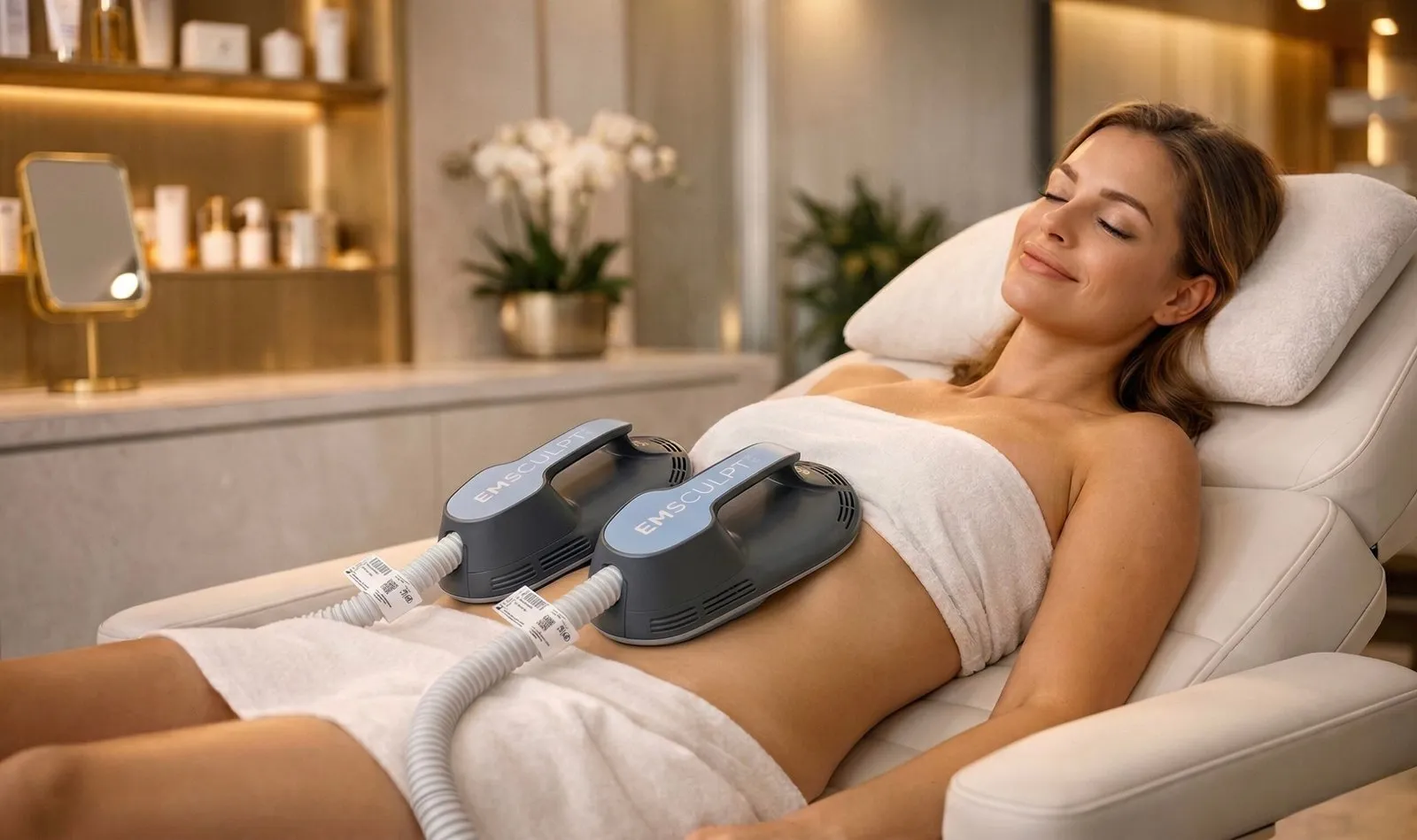


Individual results vary.
Sources & Further Reading
- Li R, et al. Associations of Muscle Mass and Strength with All-Cause Mortality among US Older Adults. PMC.
- Srikanthan P, Karlamangla AS. Muscle Mass Index as a Predictor of Longevity in Older Adults. The American Journal of Medicine.
- Skeletal Muscle Mass as a Mortality Predictor among Nonagenarians and Centenarians: A Prospective Cohort Study. Scientific Reports (Nature).
- Gluteal muscle composition differentiates fallers from non-fallers in community-dwelling older adults. PMC.
- Influence of lower-limb muscle strength and power on the occurrence of falls in community-dwelling older adults: a longitudinal study. PMC.
Frequently Asked Questions
Still Deciding?
A free 30-minute consultation is the fastest way to get an answer for your own face — no cost, no obligation.
New to DK? Claim your $50 First Visit Credit before your first visit First treatment visit of $290+ in services · book within 30 days
Reserve your Emsculpt Neo right here
Secure booking powered by Square · No prepayment required
Looking for a different treatment?
Injectables, laser, body contouring, brows and IV therapy — browse everything we offer in one place.
Not sure which treatment is right for you? Start with a free Instant Consultation


