How Long Does Masseter Botox Last? — And When the Jawline Changes

Commonly six months or more — noticeably longer than the three to four months Botox usually lasts on forehead or frown lines. The difference comes down to what the injection is doing. On the forehead it stops a muscle from creasing the skin, and the line comes back as soon as the muscle does. In the masseter — the broad chewing muscle at the back of the jaw — it lets an overworked muscle rest, and a resting muscle slowly shrinks. That shrinking is what slims the lower face, and it takes months to build back. The change peaks around month three. Individual results vary.
- One treatment commonly holds six months or longer, against about three to four months for expression lines.
- Nothing shows at first: the muscle starts to rest after two to four weeks, and the slimming peaks around month three.
- It works by letting the chewing muscle shrink from rest — not by smoothing skin.
- If you stop, the muscle slowly returns to its natural size — not bigger than before.
- It is a treatment for the shape of the lower face; jaw pain or worn teeth belong with your dentist or physician.
How long does masseter Botox last — and why longer than the forehead?
In a controlled clinical trial of Botox for an enlarged masseter, one treatment was still working clearly at six months, and at the higher doses studied the effect held for around nine months. For Botox on fine lines and wrinkles, the American Academy of Dermatology gives three to four months. Same product, roughly double the staying power in the jaw.
The reason is not a better technique. A forehead line is a crease made by a muscle: relax the muscle and the skin lies flat — and the moment the muscle works again, the crease returns. The result ends when the product does.
The masseter is a size problem. It is the muscle you feel at the back of your jaw when you bite down, and in people who clench or grind it thickens like any muscle that gets a daily workout. A thicker masseter widens the lower face and squares off the jawline. Botox does not smooth anything here — it simply lets the muscle rest, and a muscle that stops being worked slowly loses bulk. Rebuilding that bulk takes months of ordinary chewing, so the slimmer shape outlasts the product that started it.
On the forehead, Botox stops a muscle from creasing the skin. In the jaw, it lets a muscle rest until it loses bulk — and bulk takes months to come back.
The timeline, week by week
The most common surprise is how little happens at first. This is a slow treatment by design, and knowing the shape of it saves a lot of second-guessing in the mirror.
- Days 1–14 — nothing to see. No downtime and no visible change. Some people notice the jaw feels less tense by evening before anything shows.
- Weeks 2–4 — the muscle starts to rest. The shape has barely begun to follow.
- Month 3 — the peak. This is where one treatment reaches its full effect, and the point the clinical trials measure. If you are judging the result, judge it here.
- Month 6 — the review. Most people still hold a clear result. It is the natural moment to compare photographs and decide whether a second round is worth it.
If you are used to the usual Botox rhythm, our guide to how long Botox lasts covers the three-to-four-month cycle for expression lines.
What changes along the way — and what does not
Two questions come up more than any other, and the trial record answers both.
- Chewing. A few trial participants noticed a weaker bite or a tired jaw on firm food, and it settled within a month. For most people it is no more than steak and crusty bread feeling like slightly harder work for a few weeks.
- The smile. A few participants noticed a slightly altered smile for several weeks, and it resolved on its own. It happens when the product reaches a neighboring muscle that pulls the corner of the mouth outward — which is why where the injection goes matters more than how many units are used.
- The cheeks. On faces that are already slim, a higher dose can make the area under the cheekbone look hollow. It is the main reason a first treatment is dosed to your own muscle rather than to a standard number.
Everything above the jaw stays as it is: your expressions, your lip movement and the way your teeth meet. Every effect above is temporary by nature, and individual results vary.
Does the muscle come back?
Slowly, yes — and only to its natural size, not beyond it.
A clinical trial measured the masseter's thickness with ultrasound over six months. After a single round, the muscle had started to regain thickness between month one and month six. After a second round, it had not returned to its starting size by month six.
That is the case for treating it as a rhythm rather than a one-off: a second round maintains a result you already have instead of rebuilding it from scratch, and people who keep going often find their visits drifting further apart. And if you stop, nothing is lost that was not yours to begin with — the muscle simply returns to the size your own chewing supports.
Masseter Botox in Highland Park
A first visit starts with the muscle, not the syringe. We ask you to clench so the masseter can be felt and its edges mapped, look at your lower face straight on and in profile, and set the dose to what is there. The injection points sit inside those mapped edges, which keeps the effect on the muscle you came for. How the treatment itself works is on our Botox page.
One thing worth saying plainly: what we treat here is the shape of the lower face. Clenching and grinding are usually why the muscle grew, but if jaw pain, headaches or worn teeth are what brought you to this page, that conversation belongs with your dentist or physician — and we will say so at the consultation.
Botox is measured in units, and the masseter needs more of them than a forehead. Across medical spas on the Chicago North Shore, neurotoxin generally runs about $12 to $18 per unit; our Botox pricing guide sets out the typical unit ranges by area, and your own figure is confirmed at a consultation.
We see clients from Highland Park, Deerfield, Northbrook, Glencoe, Lake Forest, Winnetka, Glenview and the wider Chicago North Shore. Individual results vary.
One appointment, then a long quiet stretch.
The slow timeline in this article is why we plan the whole thing at the first visit — the muscle is felt and mapped, the dose is set to you, and your review is booked before you leave.
Neurotoxin Treatments
Soften the lines. Not the face. Just you — refreshed.
Full Botox page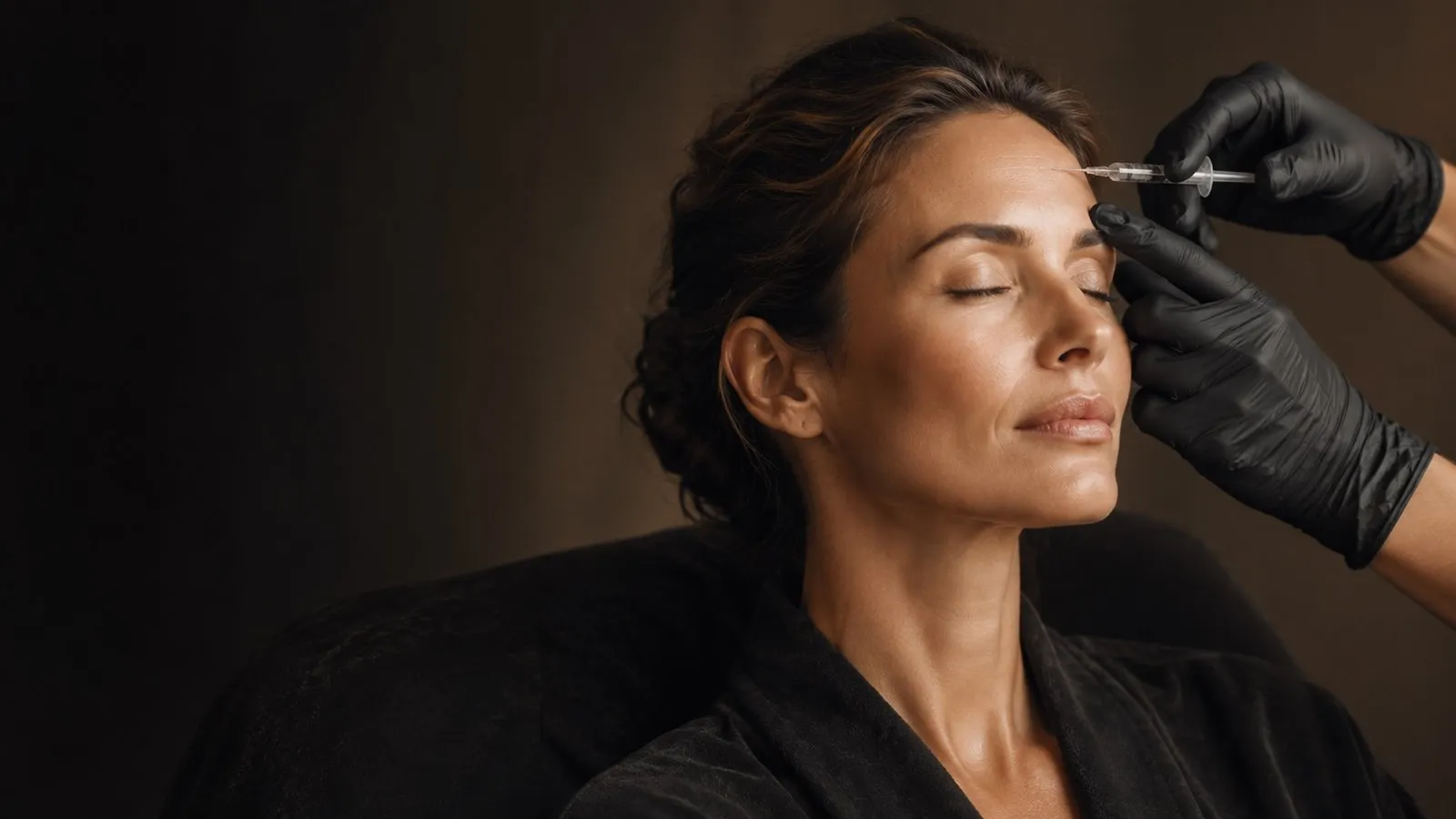

Sources & Further Reading
- American Academy of Dermatology — Botulinum Toxin Therapy: FAQs
- A Controlled Phase 2b Trial to Assess the Efficacy and Safety of a Single Intervention of OnabotulinumtoxinA for Treating Masseter Muscle Prominence (PMC)
- Botulinum Toxin Type A for the Treatment of Masseter Muscle Prominence in Asian Populations — Aesthetic Surgery Journal Open Forum (PMC)
- Exploring botulinum toxin's impact on masseter hypertrophy: a randomized, triple-blinded clinical trial — Scientific Reports (PMC)
Frequently Asked Questions
Still Deciding?
A free 30-minute consultation is the fastest way to get an answer for your own face — no cost, no obligation.
New to DK? Claim your $50 First Visit Credit before your first visit First treatment visit of $290+ in services · book within 30 days
Reserve your Botox treatment right here
Secure booking powered by Square · No prepayment required
Looking for a different treatment?
Injectables, laser, body contouring, brows and IV therapy — browse everything we offer in one place.
Not sure which treatment is right for you? Start with a free Instant Consultation


